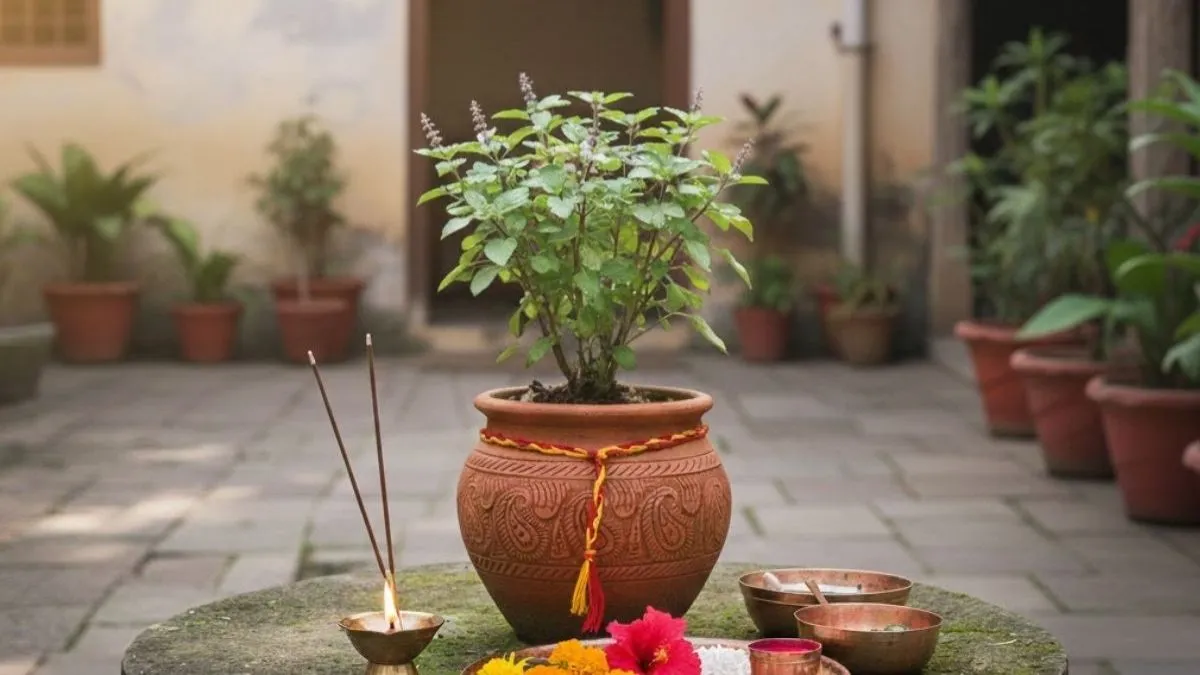
In the realm of Hinduism, the Tulsi plant transcends its botanical identity, embodying the essence of the goddess Lakshmi. Revered for its sacred significance, Tulsi is an essential offering to Lord Vishnu and his various incarnations, such as Shri Krishna and Ram Ji, particularly in the temples of Indian households. According to traditional beliefs, Lord Vishnu does not accept offerings that lack the presence of Tulsi. Alongside Tulsi, sandalwood holds a significant status, symbolizing purity, coolness, and sanctity. The practice of applying sandalwood tilak on a Tulsi leaf and placing it within temples not only elevates the sanctity of worship but also intertwines with profound spiritual and astrological implications, infusing a home with positive energy. To explore this further, we turn to insights from Astrologer Radhakant Vats of Vrindavan.
The Sacred Significance of Sandalwood on Tulsi Leaves
From a religious perspective, Tulsi is regarded as highly beloved by Lord Vishnu, with one of its names being ‘Vishnu Priya’. The primary intention behind placing sandalwood on Tulsi in the temple is to garner divine favor. The aromatic and beneficial properties of Shrikhand sandalwood make it particularly cherished by the gods. When sandalwood is applied to a basil leaf and offered at the feet of Thakur Ji or adorned on his forehead, it symbolizes complete devotion.
Moreover, the combined fragrance of sandalwood and the purity of Tulsi create a divine atmosphere that fosters happiness and tranquility within the home, while also warding off poverty. This profound connection between these sacred elements enhances the experience of worship and strengthens the bond between the devotee and the divine.
Also read: What should be done with the Manjari plucked from the Tulsi plant? Discover the surefire solution.
Astrologically speaking, Tulsi is associated with the planet Mercury, which governs intelligence and commerce. In contrast, sandalwood is linked to the energies of the Moon and Jupiter. The act of applying sandalwood to a Tulsi leaf signifies a harmonious planetary alignment. This celestial combination is believed to soothe the intellect, providing clarity and calmness to those who engage in this practice.
Astrologers emphasize that maintaining Tulsi in this manner can effectively eliminate Vaastu defects within a home. For individuals with a weakened Moon in their horoscope, the cooling properties of sandalwood can aid in achieving mental peace. Regularly practicing this ritual may also mitigate the adverse effects of shadow planets such as Rahu and Ketu, promoting a more balanced and harmonious life.
Rituals and Benefits of Tulsi and Sandalwood in Worship
The ritual of offering Tulsi leaves adorned with sandalwood is not just a decorative practice; it is steeped in deep spiritual significance. Devotees believe that the scent of sandalwood, combined with the sacred quality of Tulsi, creates a powerful energy that invites divine blessings into the home. This ritual is often performed during daily pujas or special occasions, reinforcing a sense of devotion and spiritual connection.
Furthermore, the incorporation of these elements into worship reflects a broader understanding of nature and spirituality. The Tulsi plant is often seen as a guardian of the home, while sandalwood acts as a purifying agent, reinforcing the sanctity of the space. The harmonious blend of these offerings is believed to foster a serene environment, essential for spiritual growth and prosperity.
Conclusion: Embracing Tradition for Spiritual Enrichment
In conclusion, the practice of applying sandalwood on Tulsi leaves and offering them in temples is a beautiful expression of faith and devotion in Hindu culture. This ritual not only honors the divine but also enriches the lives of practitioners through its astrological benefits. As believers engage in this sacred tradition, they invite peace, prosperity, and spiritual enlightenment into their homes.
Ultimately, the union of Tulsi and sandalwood serves as a reminder of the interconnectedness of nature and spirituality, encouraging individuals to cultivate a deeper relationship with their faith and the divine forces that guide their lives.